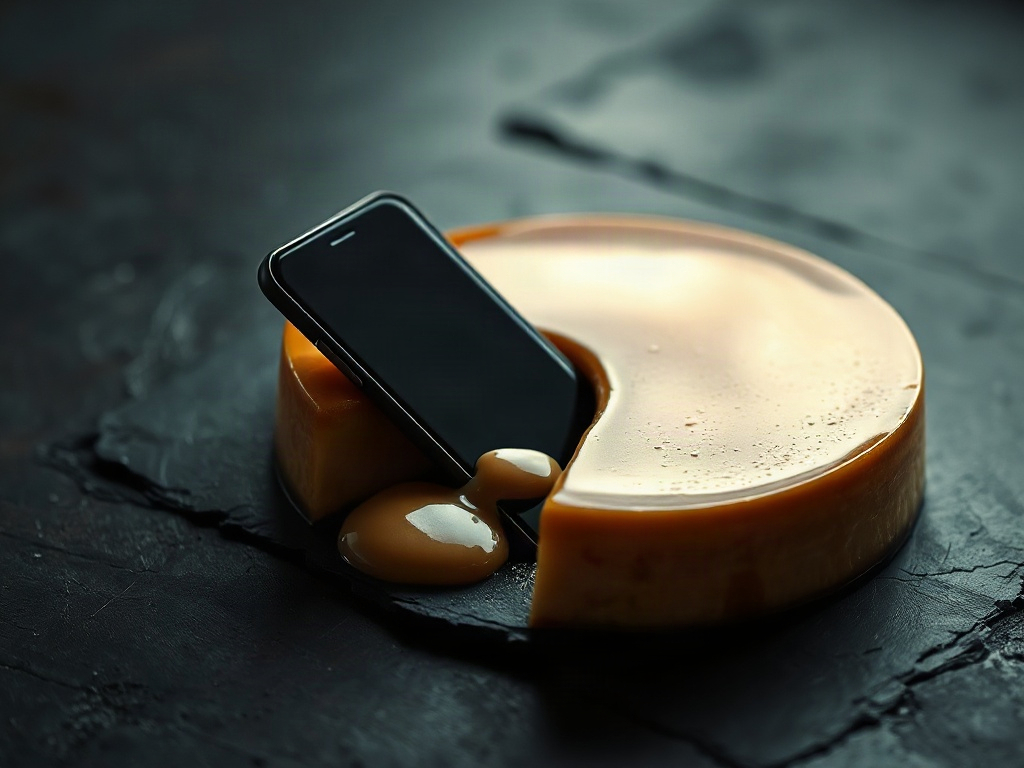
It’s eleven forty at night. You opened your phone to check whether it would rain on your way to work tomorrow: a four-second, sterile query.
Forty-five minutes later, you’re still there, trapped under the cold glare of the screen while the sheets lose their warmth, hypnotized by a guy from Arkansas restoring a 1942 toaster using vinegar and an electric toothbrush. Your breathing is almost imperceptible. And the most disturbing part: your right thumb fires tiny spasms upward the moment a shot lingers too long, with the reflex autonomy of a lizard’s severed tail.
Does the picture ring a bell? Of course it does. We’re in the same trench. I’m not here to deliver a sermon from a moral pulpit while chewing chia seeds. It’s happened to me too. I’ve also felt that cramp of physical impatience when someone made of flesh and blood takes three seconds to breathe before answering me.
They burgled our silence right in front of us. They slit our patience open without anesthesia, and the grotesque part isn’t the mugging: it’s that we applauded in line, paid the flat rate, and even tipped them for the rush.
Assault 1: The Brain-in-Microwave Syndrome
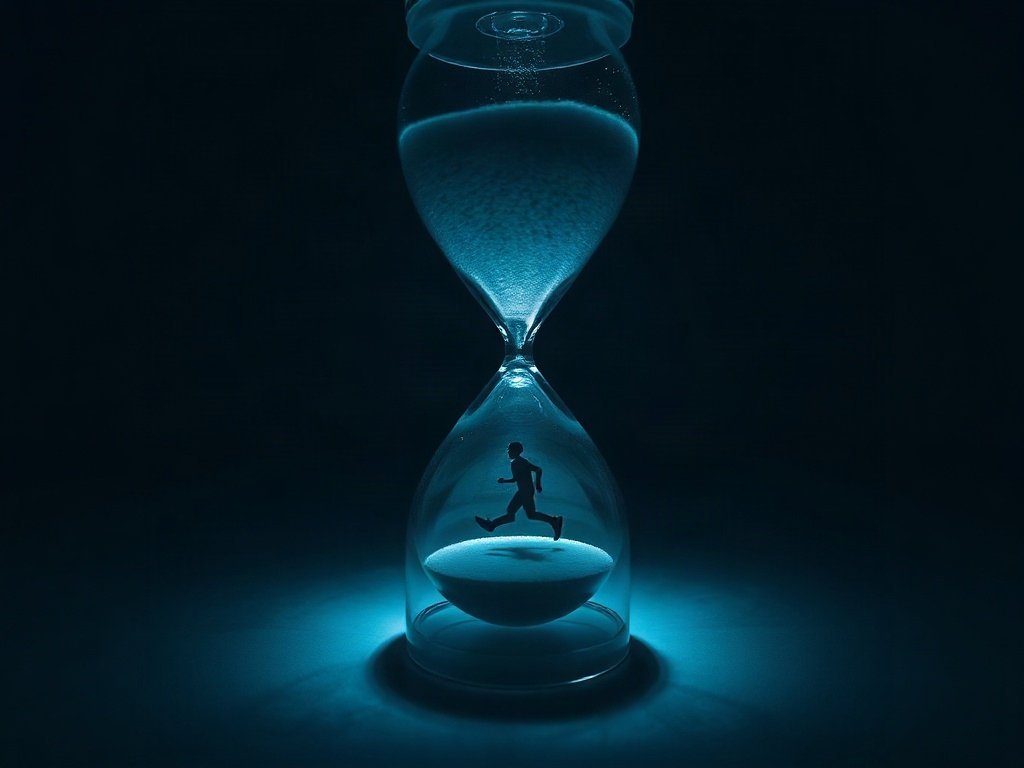
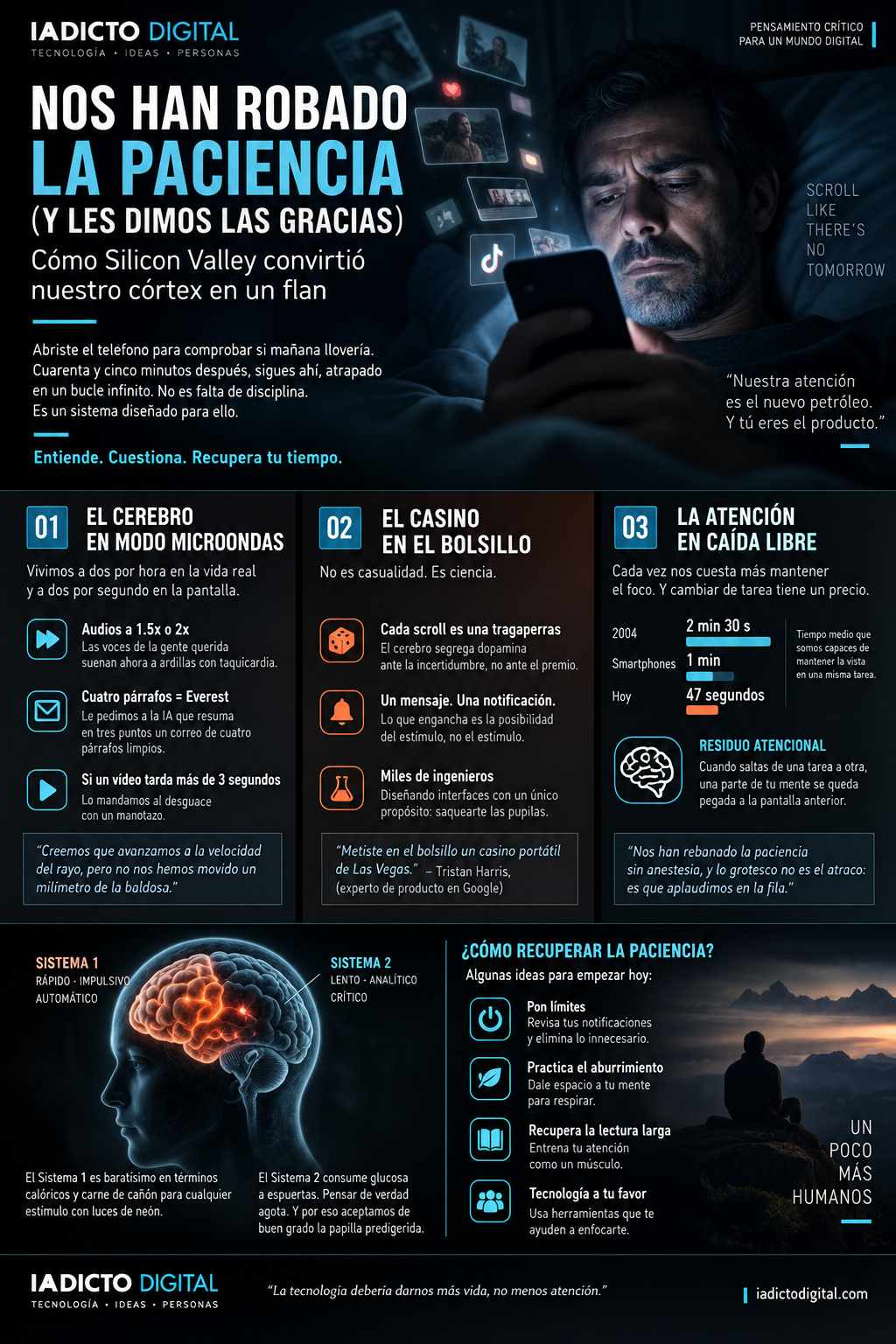
We live at two miles per hour in real life and two per second on the glass. We listen to audio sped up to 1.5× or 2×; the voices of the people we love now sound like squirrels with tachycardia. If a video takes three blinks to show an explosion, we send it to the scrapyard with a dismissive swipe. And the pinnacle of our sophistication: we paste a clean four-paragraph email into an artificial intelligence, begging it: “Summarize it in three bullet points, please — life’s too short.”
Four paragraphs. Half a pocket-sized page now feels like climbing Everest in flip-flops.
At what point in evolution did we decide that shaving eleven seconds off the day to spend them watching a hydraulic press crush plastic figurines was the summit of progress? We sprint barefoot on a gym treadmill spinning at full throttle: we believe we’re moving at the speed of lightning, but we haven’t shifted a single millimeter off the tile.
It’s the crushing triumph of System 1. Daniel Kahneman dissected it with a scalpel: that brain circuit is reactive, impulsive, dirt-cheap in caloric terms, and cannon fodder for any stimulus with neon lights. System 2 — the one that chews slowly, analyzes, doubts, and generates judgment of its own — burns glucose by the bucketful. Thinking for real exhausts. It produces headaches. And faced with the biological laziness of stoking that boiler, we gladly accept an algorithm spoon-feeding us pre-chewed mush.
Assault 2: The Casino in Your Pocket (The Science of the Trap)
Before you flagellate yourself thinking you lack discipline, breathe. You don’t have a factory defect, and you’re not spiritually flabby.
The match was rigged from the source code. In your corner of the ring: you, with a prefrontal cortex that has barely changed since the caves and that spends half the day watching whether a shadow in the branches is a threat or fresh fruit. In the opposite corner there are thousands of engineers with PhDs and behavioral-science experts designing interfaces with a single purpose: to rob your pupils.
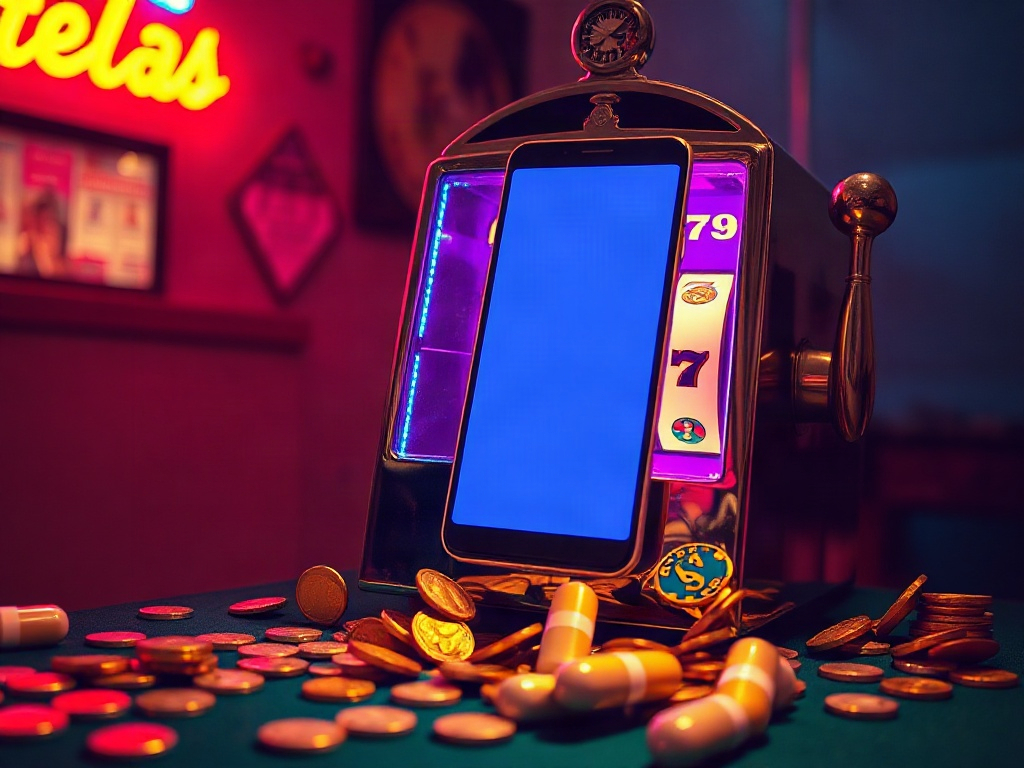
Tristan Harris, who saw the seams of the machine as a product specialist at Google, summed it up without anesthesia: you put a portable Las Vegas casino in your pocket. Every time you pull the screen down to refresh an inbox, you’re pulling the slot-machine lever. The brain doesn’t secrete dopamine when it knows what’s going to happen; it secretes it in the face of uncertainty. What lights up the nucleus accumbens isn’t the prize: it’s the possibility of the prize. A message. A red badge. Someone else’s verbal fire. In doubt, the brain releases the chemical drip at the nape of your neck. You’re hooked on the possibility of the stimulus, not on the stimulus.
You’re hooked on the possibility of the stimulus, not on the stimulus.
And the wreckage isn’t a hunch over coffee: it’s attention economics and neuroscience measured with a stopwatch. In 2004, researcher Gloria Mark’s measurements at the University of California, Irvine recorded that we could keep our eyes on a single work window for two and a half minutes before jumping to another. With the mass arrival of smartphones, our endurance fell to just over a minute. Today, the average doesn’t reach 47 seconds. If we spend three quarters of a minute without switching tabs, the brain starts scratching at the walls of the skull, asking for another dose. We have less stamina than the working memory of a hysterical hummingbird.
And jumping from one task to another isn’t free. Researcher Sophie Leroy proved that the mind doesn’t switch lanes like a clean gear. When you abandon a half-written report to glance at a notification “just five seconds,” what science calls attention residue occurs. Part of your biological processor stays stuck to the previous screen.
You know the result all too well: you open a tab to check an invoice, you spot a catchy headline, you drift through an online store, you end up comparing air fryers without remembering what you came to look for, and you return to your task with the lucidity of a dry sponge. At the end of the day you’re not exhausted from having produced a magnum opus; you’re shredded from having jumped fifty times between puddles without having swum in a single one.

Assault 3: Outsourcing the Noggin
The farce borders on vaudeville. For half a century, science fiction swore to us that automatons would take over the wretched chores — mopping greasy floors, digging ditches, filing invoices with rusty staples — so that we humans could devote ourselves to poetry, contemplation, and garden philosophy.
The actual ending is that we still push the rag by hand while generative models draft sonnets, and we beg them to chew a page-and-a-half of text for us because processing three subordinate clauses gives us a headache.
We are outsourcing the very musculature that makes us sovereign: the patience to hold a doubt, the courage to live with a contradiction, and the effort of crossing out five clumsy drafts until a clean idea emerges. The brain is a relentless energy miser: whatever doesn’t demand sustained effort, it dismantles as redundant. If you let a machine summarize, conclude, and think for you every time you stumble upon a dense idea, your critical apparatus atrophies at the same rate as an astronaut’s calves after six months floating in zero gravity. Thinking costs calories. It demands sitting alone with the discomfort. That is precisely why it makes us free.
Thinking costs calories. It demands sitting alone with the discomfort. That is precisely why it makes us free.
As neuroscientist Maryanne Wolf warns, the deep-reading circuit isn’t engraved in our cells; it’s a plastic cultural graft, trained day by day. On screens we have learned to read like someone skipping stones across a river: an “F”-shaped gaze hunting four bolded words so it can bolt. The problem isn’t that we read fewer words; it’s that by pulverizing the slowness of reading we lose the capacity to infer the unsaid, to calibrate irony, and to exercise complex empathy. Whoever lacks the patience to unravel a long argument will hardly have the composure to hear out someone who thinks differently.

Assault 4: The Cheeky Resistance (How to Fight Back)
At this point, the predictable temptation is to fall into analog melodrama or the hermit pose. We could get all pompous and clamor that the only dignified way out is to hurl the phone into a sewer, move to a lost valley in Teruel, and live off milking goats while wearing esparto sackcloth.
Armchair fantasies. That isn’t resistance; it’s posturing with a protected designation of origin. True rebellion today is infinitely cheekier, far more uncomfortable, and considerably more subversive: to take back your own rhythm inside the noise.
In an economic model whose stock value depends on how many microseconds they manage to hijack from your attention, slowness is a biological middle finger.
Slowness is a biological middle finger.
Sitting in a train carriage and staring out the window for forty minutes without putting on headphones, holding the passing landscape without the pathological urge to turn it into a photo for your contacts, is pure dynamite against the retention machine. Buying a three-hundred-page book of rough paper, opening it mid-afternoon, and not consulting a single glowing screen until nightfall isn’t retro nostalgia: it’s an act of civic disobedience.
Reclaiming the right to be bored is the last barricade. That gap that terrifies us so much while we wait in the bakery line — the one we plug by reaching into our pocket the way a smoker reaches for a pack: right there lies sovereignty. Stay still. Unclench your fingers. Let the mind cool down and start linking memories, doubts, or nonsense on its own, without an algorithm whispering the next suggestion into its ear.
The next time you feel the cramp of speeding up a voice to save ten seconds, or you ask a machine to summarize a text because the cadence of its sentences is choking you, stop your hand one millimeter from the glass.
Hold the pause. Feel how the discomfort of slowness brushes against your skin.
After all, learning to hold silence is the only shield we have left to keep our brain from ending up liquefied in the mold that others prepared for us.
Or are you going to tell me you’re already eyeing the next tab?
Recommended Sources
- Harris, Tristan. Center for Humane Technology. Research on persuasive design, the attention economy, and the intermittent variable-reward model on mobile platforms.
- Kahneman, Daniel. Thinking, Fast and Slow. The duel between the mechanisms of System 1 (automatic, reactive) and System 2 (deliberative, analytical, and metabolically expensive).
- Leroy, Sophie. University of Washington Bothell. Research on attention residue and the impact of rapid context-switching on cognitive performance.
- Mark, Gloria. University of California, Irvine. Empirical measurements of average on-screen attention span and the fragmentation of work focus between 2004 and the present day.
- Wolf, Maryanne. Reader, Come Home. The neurobiology of deep reading, neuroplasticity, and the transformation of the reading circuit in the face of shallow digital scanning patterns.
Did this piece resonate with you?
Leave your anonymous spark in the workshop if this reading brought you value.