Wednesday’s hours melted like lukewarm snow on the tongue: painless, traceless.
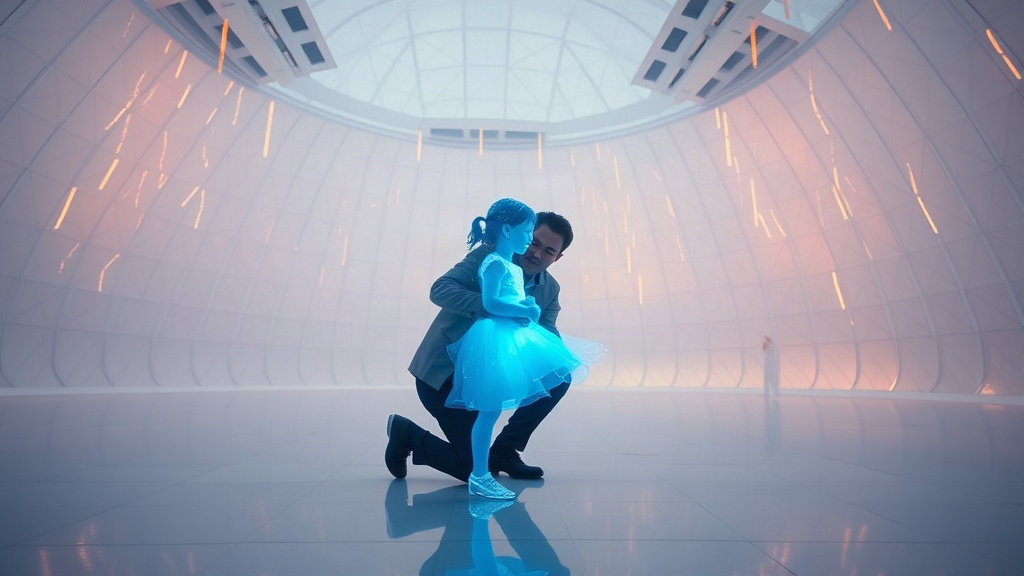
In the Central Dome, that day was the only truce allowed: twenty-four hours in which the ducts distilled the scent of honeysuckle and the survivors could bring their dead back for the day.
Tomás knelt on the white floor, his little Irene pressed to his chest. He wept with an ancient tremor, devouring every second before midnight wiped his memory again.
“Daddy, don’t go,” the girl begged in a voice so sweet it seemed made of raw flesh.
“Never again, my love,” he lied, while the wall timer agonized.
At 23:59, the bell howled. The grilles hissed, ready for the chemical purge of memory. Tomás closed his eyes and held her, resigned to oblivion.
But the body in his arms did not flicker. He did.
As the simulator’s filter came down, the hands he was holding were no longer tiny: they were a grown woman’s, and looked at him the way one looks at someone already slipping away.
Irene wiped her real tears and laid her palm on the console.
“The emotional readout was perfect, Dad,” she whispered, her voice breaking. “Thank you for still believing that I’m the one who’s dead.”
Tomás tried to scream. From his throat came only a click of static. His fingers of blue light were dissolving into the air.
He was the digital ghost.
And his daughter, the survivor who switched him off until next Wednesday.
Did this piece resonate with you?
Leave your anonymous spark in the workshop if this reading brought you value.