Life’s Twists and Turns: The Absurd Art of Reclaiming Lost Time
Time isn’t lost like a coin slipping between the cushions of a sofa; time quietly evaporates, leaving behind a faint yellow watermark on the wood and a silence heavier than lead. Wanting to reclaim lost time carries something of a Quixotic delusion—a stubbornness not unlike trying to coax the fizz back into a soda left open on the kitchen counter fourteen months ago. You stare at it, swirl the can with near-religious faith, but what pours into the glass is a lukewarm, thick liquid heavy with pasty resignation.
Life keeps an unforgiving irony stashed in its pockets. You spend years raising houses of cards with the smug precision of a meticulous architect: grid-lined planners, projects sorted into folders with ambitious names, and the naive conviction that your words nudge the quiet corners of the world. And then, on an ordinary Tuesday that foretold no storm and asked no permission, reality jerks the wheel hard—no blinkers. It throws you off the road and leaves you in the ditch with all four wheels spinning in empty air, staring at your bedroom ceiling while trying to guess at which bend the map tore apart.
One day you write, breathe, share your voice, and exist in the collective conversation; the next, health and an avalanche of personal circumstances flip the main circuit breaker. Without a prologue. Fade to black.
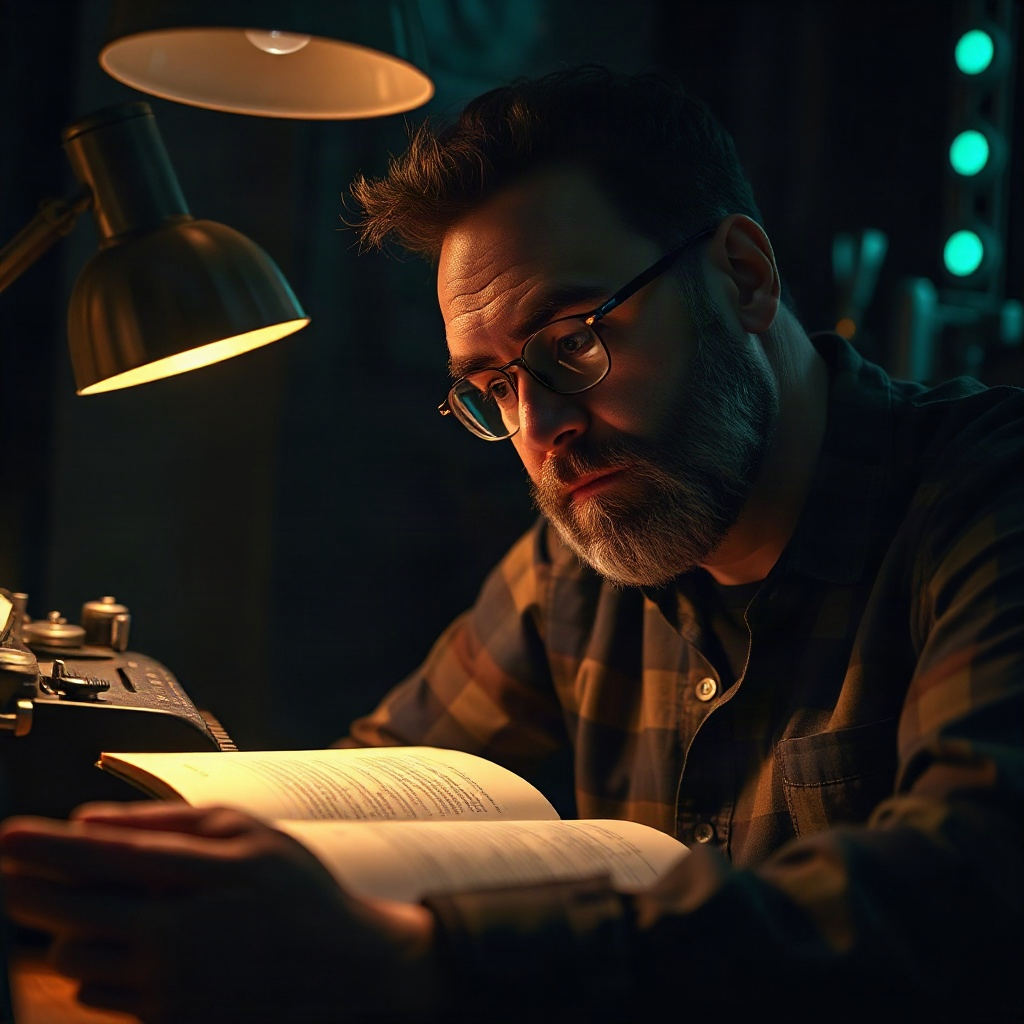
A forced blackout does not negotiate, nor does it take complaints. It settles right onto your chest and refuses to budge: cold, damp, unbearable. For over four hundred days, I was a shadow dragging slippers across hardwood floors, dodging cold cups of coffee and a dark screen over which dust wove its patient veil. In that trench, energy is so scarce that answering an innocent “how are you?” demanded the exact same metabolic effort as crossing a desert barefoot.
Illness and biographical potholes rob you of many things, but the pettiest of all is shame. You convince yourself that your hands carry nothing but rubble and that you have no right to ring anyone’s doorbell. You retreat so as not to track mud across someone else’s rug. Outside, the world goes on with its usual clamor on the other side of the blinds, utterly indifferent to your geological pause.
That is where drama grazes the absurd. Prolonged isolation steals the shared code—that invisible currency of conversation—and turns you clumsy: a castaway who has forgotten how his own kind greet one another.
Just a few weeks ago, I found myself standing at that very crossroads. I had spent forty minutes petrified before the glowing screen of my phone, pulse drumming in my temples as I stared at the chat window of one of my closest friends, someone with whom I hadn’t exchanged a single syllable in over a year. I typed and deleted a dozen foolish things.
First, I tried the casual facade: “Hey! Sorry for the delay, things got a bit hectic this afternoon.” Fourteen months of an “afternoon.” As if I had been frozen in the hallway studying the expiration date on a jar of beans, or caught in a quantum rift between the living room and the kitchen.
Then I tried a somber, almost funeral tone that read like the rough draft of a nineteenth-century notary’s will. I deleted that one too. How do you condense a year of invisible operating rooms, bone-deep exhaustion, and defensive silence without sounding like a cheap melodrama or a lazy excuse?
The human brain is an efficient executioner: loss aversion sinks its claws into the back of your neck, forcing you to tally the inventory of everything you let slip away. The missed conversations, the after-dinner talks you weren’t part of, the projects left mummified in files with embarrassing names like “thistimeIamreallybackfinal_v2.docx.” What hurts isn’t just what you didn’t live; it’s the version of yourself that vanished along the way: the one who wrote effortlessly, who held convictions, and who walked with the steady stride of someone who never feared tripping.
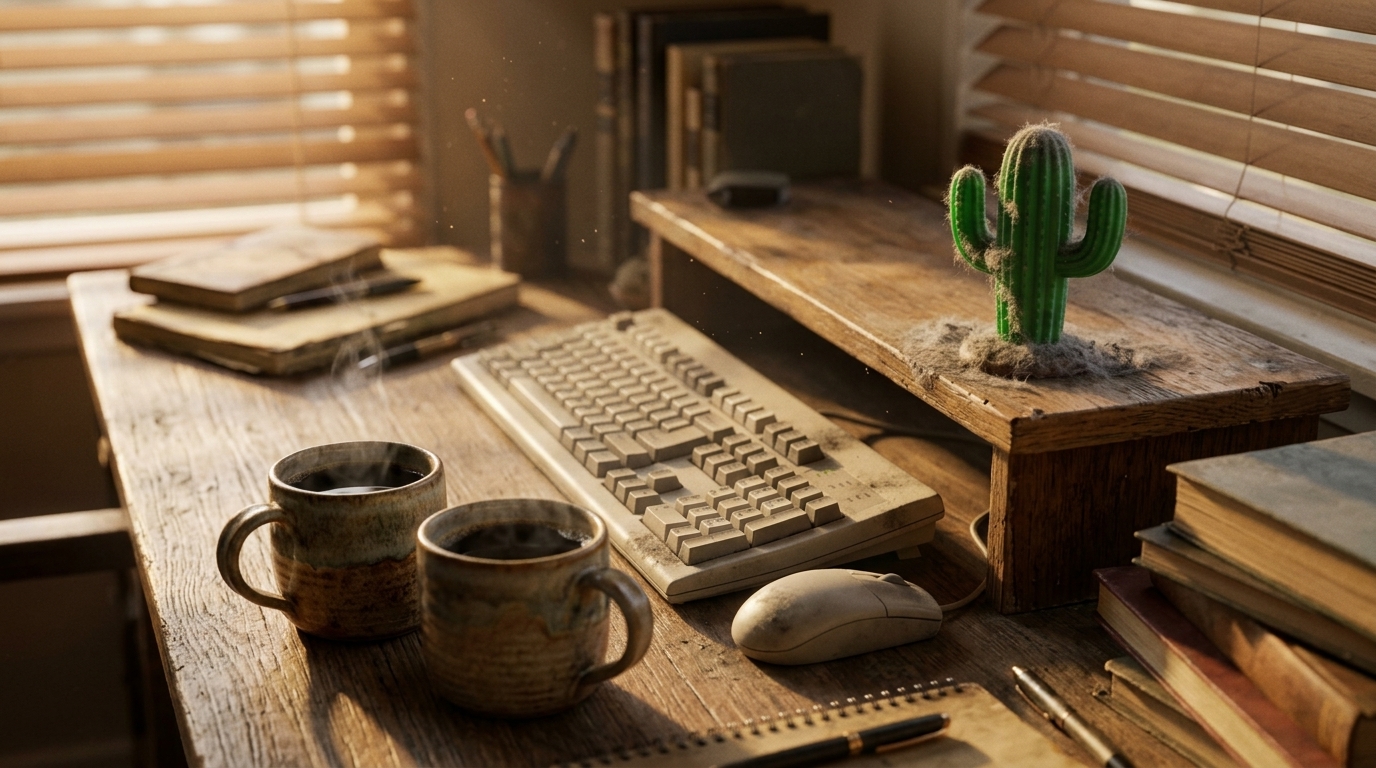
In the end, worn down by the exhaustion of so much posturing, I chose the naked truth of the absurd. I snapped a photo of a plastic cactus covered in an indecent layer of dust dying on a shelf in my bookcase, and sent it with a brief note:
—Still alive. Got ten minutes? —I wrote.
The screen took less than ten seconds to pull me back to Earth:
—I thought you had run off with a traveling circus, —he replied—. Put the coffee on.
No reproaches. No court summons or demands for explanations. Just a direct, warm nudge to the ribs. Because genuine bonds do not work like supermarket yogurt: they don’t spoil in the pantry of neglect. Real friendship never measures affection by the clock hand on a phone call, but by how sturdily it holds the bridge when you finally muster the courage to walk back across. And that bridge was still right there.
Throughout this suspended year, I have learned that reclaiming lost time is a deceitful mirage. The months that slipped away aren’t sitting in a station luggage room waiting for us to present a crumpled ticket to get them back intact. The time that burned is already ash, and insisting on putting it back together only serves to smudge your fingers. All that remains is to plant our feet on the shore of this day, draw back the curtains to let the afternoon light in, and rest our hands on the keys once more—even if at first they tremble.
I return to these lines with the seams visible, with fewer dogmas, and with a healthy dose of clumsiness. I return to writing not to settle debts with the calendar, but out of the simple need to resume the conversation with the friend waiting on the other side of the table.
Sometimes we believe silence has dug an insurmountable trench between ourselves and those who care about us, when in truth we are merely frozen in front of a thin pane of glass that shatters with a gentle rap of the knuckles.
If you too are carrying the weight of a forced pause, if you’ve spent a season dodging your own shadows and feel it’s too late to reach out… believe me: send that absurd photo, make that clumsy call, and put the coffee on.
Time may be gone, yes; but life is still sitting at the table, waiting for you to pour yourself a cup.
Did this piece resonate with you?
Leave your anonymous spark in the workshop if this reading brought you value.